
Silos & Echo Chambers
Redefining Masculinity: Part 3 & Social Media: Part 2

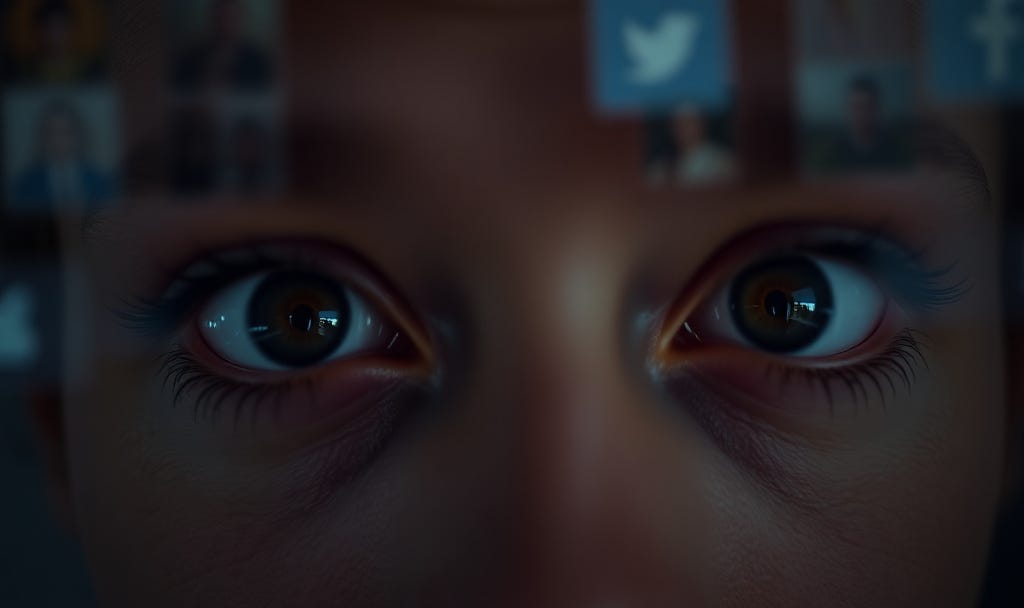
In recent newsletters, I’ve been discussing two seemingly unrelated topics; social media and masculinity. While initially appearing unrelated, this newsletter will show how they intersect directly.
Whenever there is a mass shooting, while the rest of the internet, politicians, and people in the public eye hold their collective breath in preparation to find out what side of the isle that shooter was on, I’m wondering what led the shooter to this tragedy. Not politically really, but what behaviors and lifestyle traits made him believe this was the right thing to do. When the contentious argument inevitably shifts to gun control and what we should or shouldn’t do about guns, my thoughts have recently moved to other concerns; isolation, masculinity, and online social media habits.
I’ve been thinking a lot about the world in which our children are being raised. I think about my daughter’s safety every morning when she runs across the street to hop on her bus. I worry about the burdens her generation will carry as they grow. And I fear the new pressures they all face with our ever evolving technology.
One thing that gives me solace is my daughter’s emotional intelligence and how quickly she can feel something, identify it, and communicate it to us. It’s one of her most amazing qualities. Many people may suspect that being a psychologist, she gets this from me, but it actually comes from her mom.
When I think about how I would have navigated being raised in the modern world, it turns my attention to boys, and it makes me worry. While I truly think it’s improved, it still feels like boys are mostly taught to ignore their emotions and display strength. As a result, I worry about how often their emotions are dismissed and invalidated. I worry about how we talk to them, teaching them that emotions are for girls. I worry that mom’s taking on the burden to talk to them about emotions just reinforces that narrative. And I worry about how boys are learning to channel those emotions into anger.
Where do boys then turn as they age and get more immersed in social media platforms? They’re often flooded with influencers who emphasize traditional masculinity and shun male vulnerability. Some even cross over into hate speech and violent rhetoric. What’s a young, vulnerable, easily influenced mind to do with all this information? While male invulnerability has long been a struggle in society, it’s now amplified by the explosion of social media. To be fair, there are plenty of influencers who emphasize empathy, vulnerability, and emotional security for boys and young men, but their platforms tend to be much smaller and there are far fewer of them.
The internet and social media have created a vast new world of content for all people, but particularly young people, to get lost in. If we struggle to connect with others in the real world, instead of being forced to take risks, meet new people, and get involved in our communities, we can slip away to the quiet, safe spaces of our social media platforms. There, we can “connect” with like-minded individuals, follow the people we admire, and bully the people we dislike from the safe distance of our bedroom.
Why take the risks of trying to connect with people in person and possibly be rejected when you can get everything you feel like you need online? I feel this pull myself. After a long day at work when I’m feeling tired, it takes very little effort to scroll through social media instead of being present for my family at home. After the first few minutes, though, I begin to notice that hollow feeling in the pit of my stomach that screams to me that something is missing. I don’t know what it is at first. My head begins to pulse from the light of the screen, but I just want to see one more post because the last one was kind of interesting. Then, the infinity scroll has me in its throws and I look up an hour later, and I don’t know exactly what happened. I feel more exhausted, my eyes are dry, and I’m filled with a thousand mixed emotions that generally culminate in a level of anger that I don’t fully understand.
I’m angry at so many people now, and I don’t have a coherent understanding as to why, but it somehow makes perfect sense in my head. It’s overwhelming. For vulnerable young boys, the platforms, with their short form videos, flashy colors, exciting actions, and infinity feeds, are naturally addictive, and they prey on our tendency to be more attracted to negative stories. It’s the same as the old news adage, “if it bleeds it leads” but on a much more magnificent scale. With the nature of social media being to shy away from vulnerability and embrace strength, it only serves to reinforce the norms that we’re teaching our young people, particularly young boys. Then you add in the fact that this is the normal information diet in which they were raised, it doesn’t even seem all that odd. Things have always seemed this chaotic, overstimulation is a baseline, and they haven’t developed skills to discern truth from fiction.
The longer you engage with an algorithm, the more it makes you a prisoner of it and the information it feeds you. It feeds us what we like, hides things that would disagree and challenge our thoughts, and leaves us siloed in the isolation of the echo chamber of our own beliefs. The more and more you engage with this pattern, the further down the rabbit hole it takes you, and once you engage with other people that have gone down the rabbit hole too, that’s where normal people get converted.. They are isolated, often lonely, extremely vulnerable, sometimes traumatized, and communicate through a screen without close interactions. It becomes a breeding ground for extremism. It’s only once you add easy access to weapons that it becomes violent.
I’m not going to argue about guns on this forum. They play a role, but they are by no means a sole cause. While access to guns may be a final straw to make the violence occur, I worry the root causes of our mass shootings lie much deeper. I also don’t think these violent acts can be reduced to mental health; not unless we have a new diagnosis for social media isolation and masculine invulnerability. The real culprit is ourselves and the way we’ve allowed each other to slowly disconnect. It’s not completely our fault. The cards are currently stacked against us, but we’re a resilient species and we can adapt.
The cure isn’t to eliminate social media and prescribing emotional check ins every week. It’s more subtle than that, but much of the cure starts with how grown men talk to the boys in their life. For too long, men only talk to their younger counterparts about traditional masculine traits. We’ve got to learn to include vulnerabilities in our conversations as well; leaving space to explore a son’s fear of being rejected by a girl, allowing a nephew to process his sadness about how kids have bullied him at school, or seeking to understand a young boy’s anger and meeting it with empathy and not hostility.
This is a major part of being men that has been neglected, but when done properly, it allows boys to connect in a way that goes beyond traditional masculine tropes and teaches them how vulnerability begets connection. When our vulnerabilities are met with empathy and understanding, there is often less desire to seek out validation online. When we feel a connection in the world, we don’t seek our insulated echo chambers on the internet. When we are met with love in the real world, we don’t feel the pull to dehumanize those we dislike on social media. Countering our loneliness epidemic and mass shootings doesn’t come with a simple solution, but it starts with our willingness, collectively, to take risks, connect, show vulnerability, and ultimately, to be more present with each other.
-Luke
Really well written!
I often worry too about the narrative and agenda being sold to young impressionable boys and how that is perhaps shaped and solidified in other areas of their life’s: parents, friends, etc. I actually think my fears are quite amplified because I also have worked with violent teen boys and seen them grow into dangerous angry men, because society doesn’t hold space for them to be something different. This is of course not always the case, but sadly I’m finding it the case when it matters most. When the boys of interest are the ones who need reform, who need to be allowed tenderness, otherwise they risk being lost in the ether of Andrew Tates and gang violence and causing really genuine harm in community to others. And we haven’t even touched on the harm of incel messaging and narratives. The internet is divisive and polarising and craze inducing and young developing minds are a perfect target for corruption - they haven’t learned critical thinking, discernment, paradox. And it’s so sad that their future potential is lost to the aggressive narratives on the internet that teach hate. Heart breaking.
Such an important topic!
I totally agree!